Mind
How to Stop Revenge Trading: A Discretionary Trader's Protocol
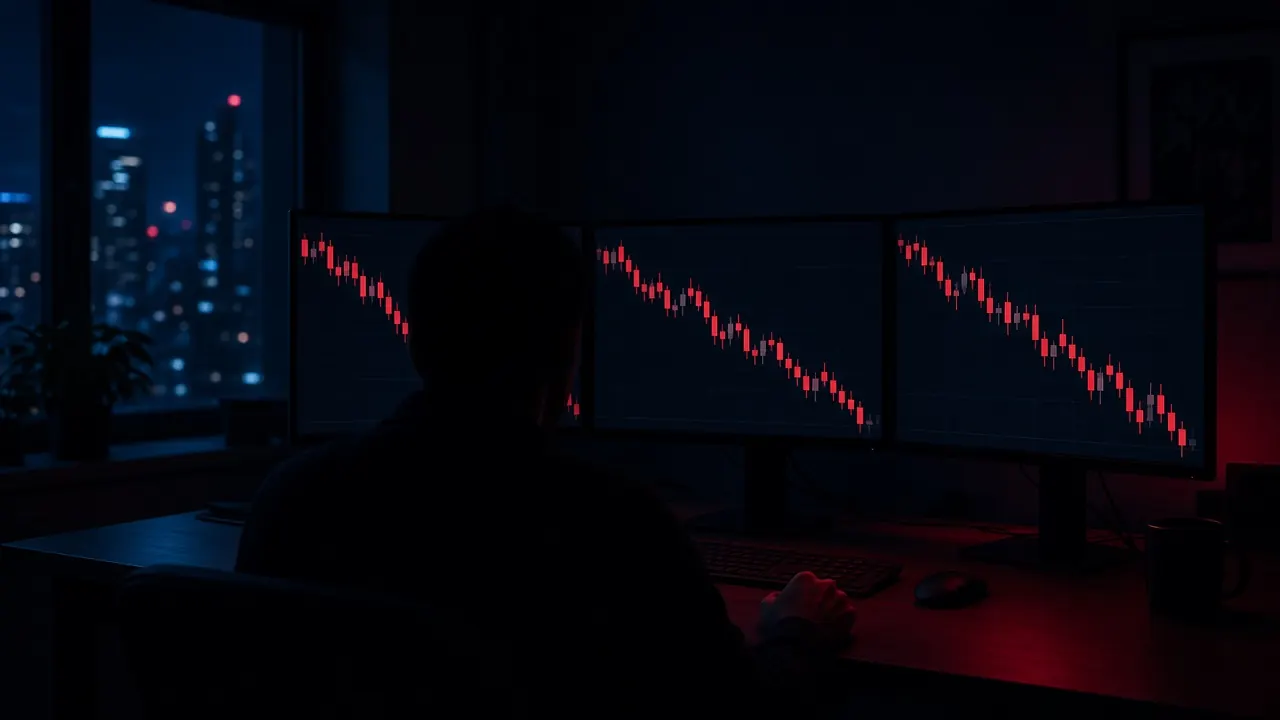
One small loss. Forty minutes later, it's nine times bigger. The market didn't change. You did. Here's how to stop it.
Contains affiliate links; we may earn a commission at no cost to you (details). Educational only, not financial advice (disclaimer).
It starts with a normal loss.
Clean setup. Stop in the right place. Price tags it and you’re out $120. That’s the job. Nothing went wrong.
But it feels wrong. So you hop back in. Slightly bigger. On a chart that sort of looks like your setup if you squint.
Loss number two. Now you’re down $400 and you can feel your pulse in your neck.
Trade three gets double size because “this one’s obvious.”
It wasn’t. Forty minutes after a perfectly normal loss, you’ve handed back a week of work. Nobody did that to you. You did it to yourself, one click at a time.
That’s revenge trading. The good news: it’s one of the most fixable leaks in trading, because it follows the same script every time. Learn the script and you can walk off stage.
What it actually is
Revenge trading is entering a trade to get even, not because your plan said go.
The chart turns into background noise. The only number that matters is the red one at the top of your screen, and you want it gone.
Here’s the test that catches it almost every time:
Would I take this exact trade, at this exact size, if I were green today?
If the honest answer is no, you’re not trading anymore. You’re arguing with the market. And the market doesn’t argue back. It just takes the money.
Why the urge is so strong
You’re not weak. You’re wired this way.
Losses hurt more than wins feel good. Losing $200 stings a lot more than winning $200 feels nice. That’s one of the most reliable findings in behavioral economics, and it’s why being red feels like an emergency instead of a normal part of the day.
Being down makes you gamble. When people are behind, they get more willing to take long shots that could bring them back to even. Watch a casino at 2 a.m. and you’ll see it. Watch your own order history after a loss and you’ll probably see it too.
Your body is in the trade. A loss triggers a real stress response: faster heart, tunnel vision, a hot face. That state is great for running from a bear. It’s terrible for reading a chart. The version of you making decisions five minutes after a loss is not the calm version who wrote your plan.
So the goal isn’t to stop feeling the urge. You can’t. The goal is to make sure the urge never gets access to the order button.
“You can't stop the urge. You can stop the urge from having access to the order button.”

Know your tells
Revenge is easy to stop on trade one. By trade four, good luck. So you want to catch it early, while you still have a say.
Common tells:
- Size creeps up right after a loss
- Entry rules get looser (“close enough”)
- Time between trades shrinks
- You move your stop to avoid “another stupid loss”
- You’re doing math on how many points you need to get back to zero
- Physical stuff: clenched jaw, leaning toward the screen, typing harder than usual
Pick your top two. Write them on a sticky note on your monitor. When you notice one, that’s not a “be careful” moment. That’s a stop moment.
The anti-revenge protocol
Willpower fails exactly when you need it. Rules made in advance don’t. Here’s a simple protocol you can set up tonight.
1. Set a daily loss limit, and make it hard. Pick a number that’s small enough that hitting it doesn’t ruin your week. When you hit it, you’re done. Not “done unless something great shows up.” Done. If your platform can enforce it automatically, turn that on. Future you will try to negotiate. Don’t give him the option.
2. Add a cooldown after any loss that stings. Not every loss. The ones that make you mad. Stand up, leave the desk for 15 to 20 minutes, and do something physical: walk, push-ups, refill water. You’re letting the stress response burn off before you make another decision.
3. Write if-then rules. Plans that say “if X happens, I’ll do Y” are much easier to follow than vague goals like “stay disciplined.” Examples:
- If I take two losses in a row, then I cut size in half for the rest of the day.
- If I catch myself moving a stop, then I close the trade and stand up.
- If I hit my daily limit, then I close the platform and log the day.
4. Lock your size in before the session. Decide your max position size in the morning, when you’re calm. After a loss is the worst possible time to pick a number.
5. Re-enter only through your checklist. Before any trade after a loss, read your setup checklist out loud. Yes, out loud. It feels silly. It also forces your brain to slow down long enough to see that this “setup” is just a feeling with a chart attached.
30-second tilt check
What to do after a revenge spiral
It’ll still happen sometimes. When it does:
- Stop for the day. No “one more to fix it.”
- Log it honestly. What was the first loss? What did you feel? Which tell did you miss?
- Find the moment. There’s always one trade where it flipped from trading to getting even. Name it.
- Make one rule. Not ten. One specific if-then rule that would’ve caught that moment.
- Come back smaller. Trade at reduced size the next day. Confidence comes back from clean execution, not from one big win.

The real flex
Anyone can take a trade. The traders who last are the ones who can take a loss, feel it fully, and then do nothing for twenty minutes.
That’s not boring. That’s control. And it compounds.
Why discretionary traders get hit hardest
A mechanical system doesn’t care that you just lost. You do. And when you trade on judgment, your judgment is the thing that’s compromised.
After a loss, watch what happens to your chart reading. Every wick starts to look like rejection. Every chop looks like a Wyckoff spring. You’re not reading the market anymore. You’re shopping for permission.
A simple check: before any trade after a loss, name the level, the structure and where you’re wrong, out loud or in writing. If you can’t do all three in ten seconds, it’s not a setup. It’s revenge.
Quick recap
- Revenge trading = trading to get even, not because of your plan.
- The urge is normal. Letting it touch the order button is optional.
- Learn your two biggest tells and treat them as a stop sign.
- Hard daily limit, cooldown after painful losses, if-then rules, size locked in advance.
- After a spiral: stop, log, find the moment, make one rule, come back smaller.
Educational content, not financial advice. If you can’t stop trading despite mounting losses, please talk to a mental health professional. See our disclaimer.
FAQ
What is revenge trading?
Revenge trading is taking a trade to win back a recent loss instead of because your plan gave a signal. It usually shows up as bigger size, looser entries, and less time between trades.
How long should I wait after a loss before trading again?
There's no magic number. A fixed break of 15 to 20 minutes after any loss that stings, plus a hard daily loss limit, works for most traders. The key is choosing the rule before the session starts.
Is revenge trading the same as overtrading?
They overlap. Revenge trading is triggered by a loss and aimed at getting it back. Overtrading is trading more than your plan calls for, which can also come from boredom or overconfidence after a big win.
Can revenge trading happen to experienced traders?
Yes. Experience makes you faster at noticing it, not immune to it. That's why the best fixes are rules and friction, not willpower.
Up next · 5 minFOMO in Trading: Why You Chase, and 6 Rules for Discretionary Traders